Syracuse, NY Cap Rate 4.70%
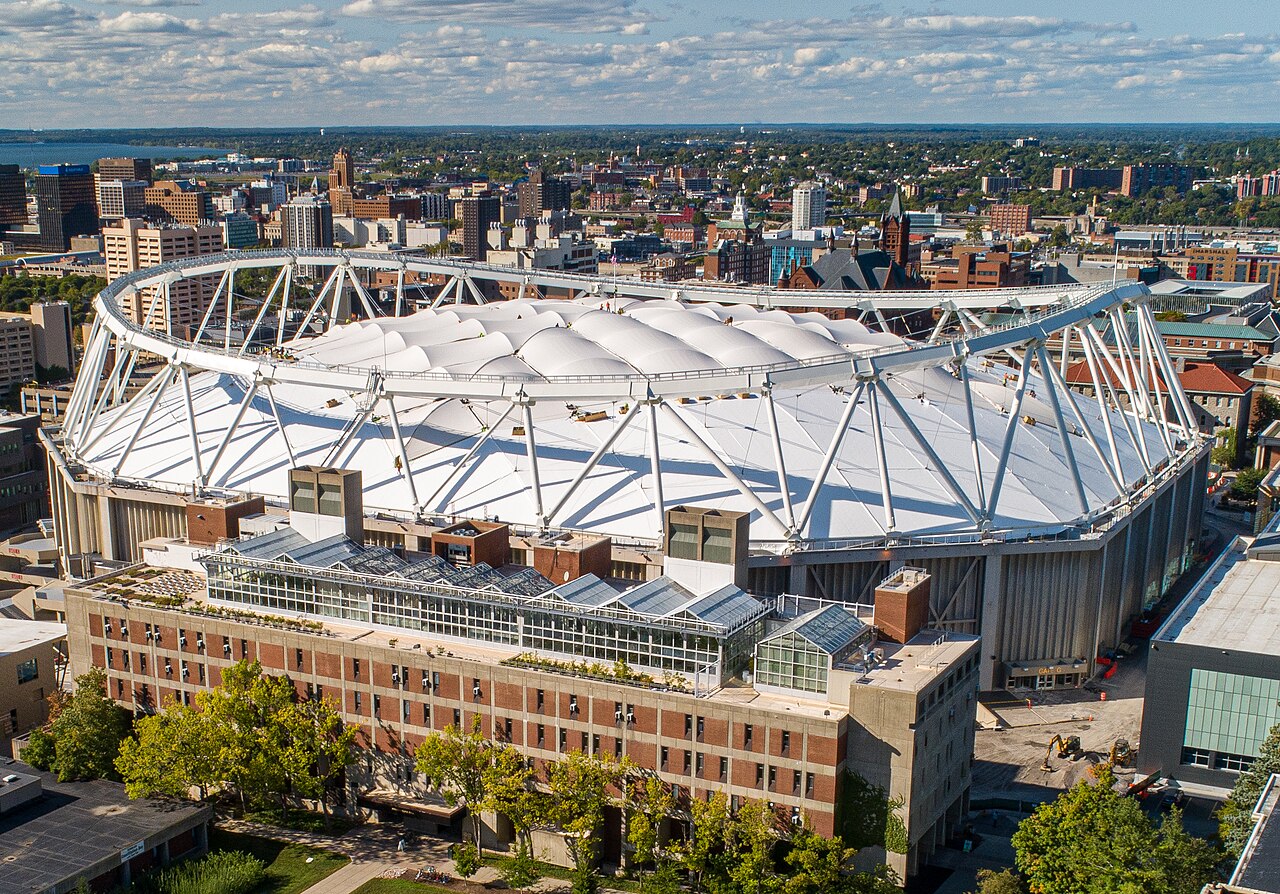
Syracuse is undergoing the most dramatic structural employment transformation of any upstate New York metro — Micron Technology announced in 2022 a planned $100 billion semiconductor mega-fab in nearby Clay (the largest single private investment in NY history). The fab is in early construction with employment ramping over the next decade. The 4.70% cap rate at a $250,000 median price keeps the 0.65% rent-to-price ratio close to functional. Population growth at -0.2%/yr is essentially flat now but expected to inflect upward as Micron hiring ramps.
Employment is anchored by Syracuse University (private research university with ~22K students plus the broader research and athletic enterprise), SUNY Upstate Medical University (one of the major academic medical centers in upstate NY), the broader Crouse Hospital and St. Joseph's Health, the announced Micron Technology fab in Clay (the multi-decade ramp will eventually add ~9K direct jobs plus supplier cluster — early construction has begun, full production not expected until the 2030s; the announcement alone has affected real estate dynamics in the metro), Lockheed Martin's Syracuse operations (the legacy radar and electronics business), the broader Onondaga County government, Carrier Corporation, the broader trades-and-construction economy currently scaling for Micron-related projects. Submarkets stratify cleanly: the East Side / Westcott / University Hill is walkable urban with strong appreciation; the broader DeWitt and Manlius suburbs are premium school-district zones; Clay and the immediate Micron-fab adjacent submarkets are seeing speculative pricing pressure as investors position ahead of the construction ramp; the inner-city neighborhoods offer deeper-value workforce inventory with the operational complexity that comes with older housing.
New York property tax in Syracuse area is on the higher end nationally — Onondaga County effective rates often exceed 2.5%. NY state income tax is graduated with a top rate near 10.9%. NY landlord-tenant law is strongly tenant-protective. Insurance is reasonable but verify winter / freeze deductible structure (Syracuse is one of the snowiest US metros). The structural advantages: Micron is genuinely transformative if it materializes at announced scale — the largest single private investment in NY history with multi-decade commitment; SU + Upstate Medical provide durable white-collar tenant depth; cost basis is among the lowest in NY. The structural risks: Micron timeline and scale are uncertain — semiconductor industry cycles have historically been brutal, and project delays or scope reductions are common; NY regulatory environment is operator-unfriendly; upstate demographic trajectory has historically been weak. For long-hold investors willing to bet on Micron materializing, Syracuse offers an asymmetric upside — but underwrite conservatively because the Micron thesis is still mostly forward-looking.
Market data powered by Zillow Home Value Index (ZHVI) and Zillow Observed Rent Index (ZORI) · Updated Feb 2026
Market Data
2026 Market Update: Syracuse
Syracuse's 0.6% rent-to-price ratio is well below the 1% rule. At median prices of $250,000, the $1,620/mo rent produces only $979/mo in NOI. Investors here need to target below-median properties or pursue value-add strategies to make the numbers work.
At current rates, a 20% down conventional loan ($50K at 7%) would result in approximately $-351/mo cash flow — negative at median prices. Larger down payments, seller financing, or buying 15–25% below median are strategies to turn the numbers positive.
Property taxes consume 23% of gross rent here — one of the highest ratios in our dataset. This significantly compresses margins and makes Syracuse a market where tax-conscious underwriting is essential. Every deal should be stress-tested with potential assessment increases.
Deal Modeling & Scenarios for Syracuse
All figures below are computed from Syracuse's real market medians. Use them as a baseline; override with property-specific numbers in the calculators.
Property Tax Bill in Real Dollars
At 1.75% effective rate on the $250,000 median price, the annual tax bill is $4,375 — that's very high (top 15% of US markets) (+65% vs the national average of ~1.06%). Verify the actual assessed value before purchase; sale-triggered reassessments can push the bill higher than the seller's current statement.
5-Year Cap Rate Trajectory
If Syracuse continues appreciating at 2%/yr while rents grow at a conservative 3%/yr, cap rate holds roughly steady as price growth outpaces rent. Year-by-year projection at the median:
| Year | Est. Price | Est. Rent/Mo | Cap Rate |
|---|---|---|---|
| Today | $250K | $1,620 | 4.7% |
| Year 1 | $255K | $1,669 | 4.7% |
| Year 2 | $260K | $1,719 | 4.8% |
| Year 3 | $265K | $1,770 | 4.8% |
| Year 4 | $271K | $1,823 | 4.9% |
| Year 5 | $276K | $1,878 | 4.9% |
Three Financing Scenarios
Same median-priced Syracuse property — different capital structures. All-cash maximizes cap rate. Leverage trades cash flow for higher cash-on-cash return when the spread between cap rate and borrowing cost is positive.
| Scenario | Cash Invested | Monthly Cash Flow | Annual CF | Cash-on-Cash |
|---|---|---|---|---|
| All cash | $250K | $979 | $11,743 | 4.7% |
| 20% down conventional @ 7% | $58K | $-351 | $-4,217 | -7.3% |
| 25% down DSCR @ 8.5% | $73K | $-463 | $-5,559 | -7.7% |
Three Price Tiers: Below, At, and Above the Median
Properties don't always trade at the median. Lower-priced units typically offer higher cap rates but harder operations; higher-priced properties tend to compress cap rates while attracting better tenants. All-cash assumptions below:
| Tier | Price | Rent/Mo | NOI/Yr | Cap Rate | Monthly CF |
|---|---|---|---|---|---|
| Below median (~75% price) | $188K | $1,377 | $8,725 | 4.7% | $727 |
| At median | $250K | $1,620 | $9,633 | 3.9% | $803 |
| Above median (~125% price) | $313K | $1,863 | $10,540 | 3.4% | $878 |
Total Return Over a 5-Year Hold
Cap rate is just one piece. Real estate returns come from four sources: cash flow, appreciation, principal paydown, and tax benefits. Assuming 20% down conventional financing at 7% and a 5-year hold at Syracuse's historical appreciation rate of 2%:
On a $50K down payment, that's a 39.9% total ROI over 5 years (not annualized). Tax benefits from depreciation are additional and depend on your personal tax bracket.
Risk Flags Specific to Syracuse
Automated checks against the underlying data — surface only the risks that actually apply to Syracuse, not generic boilerplate:
Cap Rate Calculator — Syracuse
Pre-filled with Syracuse medians. Adjust to match a specific property.
Cash-on-Cash Return — Syracuse
Factor in financing to see your actual return on invested capital in Syracuse.
Is Syracuse a Good Place to Invest in Rental Property?
Syracuse, NY has a population of 148,620 and has been growing at -0.2% annually — roughly in line with national trends, meaning demand is stable but not exceptional. The median home price of $250,000 paired with median rents of $1,620/mo produces an estimated cap rate of 4.70%.
Property taxes at 1.75% are notably high and represent a significant drag on cash flow — model this expense carefully, as it can make or break a deal. The vacancy rate of 6.8% is moderate and within normal parameters for a healthy rental market.
At a price-to-income ratio of 6.5x, homes cost about 6.5 times the local median income of $38,200. This elevated ratio means homeownership is stretched, supporting rental demand but limiting buyer pools. Home values have appreciated at roughly 2% annually. Steady appreciation means total returns will be primarily cash flow-driven — the more sustainable model for long-term wealth building.
Bottom line: Syracuse presents moderate opportunities. Cap rates near 4.70% mean deals need careful sourcing — look for value-add rehabs or emerging neighborhoods where rents are climbing.