Mesa, AZ Cap Rate 2.96%
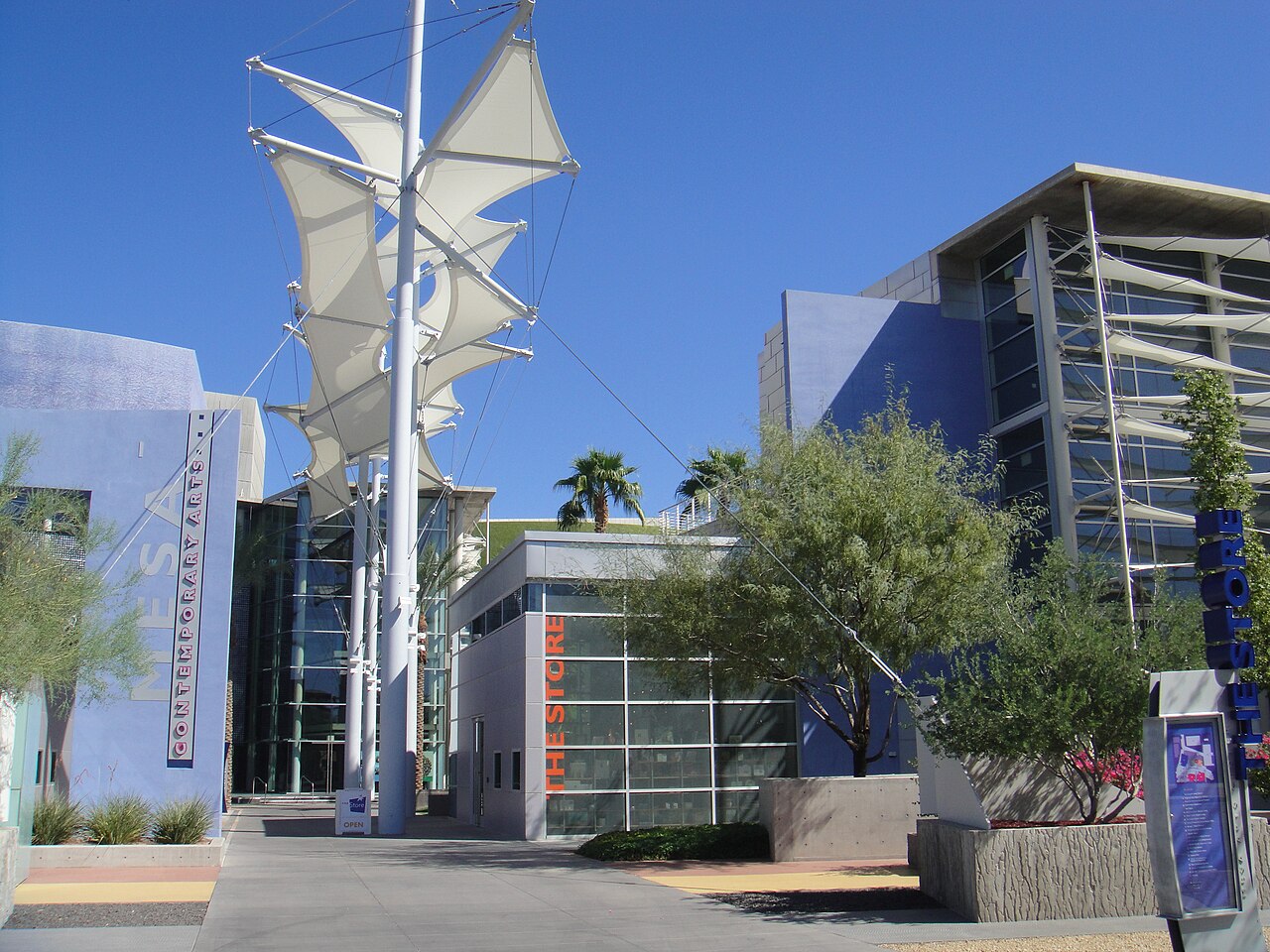
Mesa is the third-largest city in Arizona and the population anchor of the East Valley — Phoenix metro's eastern half. Often overlooked because of Phoenix's dominance, Mesa actually has more people than Atlanta, Miami, or Minneapolis proper. The 2.96% cap rate at a $445,000 median price reflects sustained post-2020 in-migration that ran prices ahead of rents. The 0.39% rent-to-price ratio sits below the 1% rule. Population growth at 1.6%/yr is among the stronger Sun Belt numbers.
Employment is anchored by Boeing's Mesa Apache helicopter assembly operations (the only US site that builds the AH-64 Apache attack helicopter — a major aerospace employer), Banner Health (the dominant regional medical system, headquartered in Phoenix with major Mesa operations), Apple's major Mesa data center, Empire Southwest (Caterpillar dealer with major operations), the broader East Valley tech employer base (Intel's Chandler fabs just south pull engineering and supplier employment), Arizona State University Polytechnic campus, Mesa Community College, the City of Mesa (one of the larger Arizona municipal governments), and a meaningful retiree-and-resort overlay (Mesa has historically been a snowbird destination). Submarkets stratify cleanly: the historic Robson Ranch / West Mesa areas are walkable urban-historic with strong appreciation; the broader East Mesa and Northeast Mesa (Las Sendas) are premium suburban-school zones drawing professional family rentals; the broader Gateway Airport corridor is the high-growth submarket; Apache Junction east is the more workforce-rental edge of the metro.
Arizona property tax at 0.63% is among the lower rates nationally. AZ state income tax is moving toward a flat ~2.5% (one of the lower state-tax structures in the country). Insurance is reasonable but verify monsoon / hail deductible structure. The structural advantages: Phoenix metro continues to be one of the larger US in-migration destinations; Apple data center + Boeing Apache + Banner Health is a diversified employer mix; AZ tax structure is genuinely landlord-favorable; cost basis is materially below Phoenix proper or Scottsdale. The structural risks: water access is the long-term variable for the entire Phoenix metro (Colorado River cuts under the 2024 Drought Contingency Plan affect Mesa as much as anywhere else); summer heat extremes have meaningful operational implications. For investors who want Phoenix-metro exposure at cash-flow math closer to functional than central Phoenix, Mesa is the most underrated East Valley option.
Market data powered by Zillow Home Value Index (ZHVI) and Zillow Observed Rent Index (ZORI) · Updated Feb 2026
Market Data
2026 Market Update: Mesa
Mesa's 0.4% rent-to-price ratio is well below the 1% rule. At median prices of $445,000, the $1,720/mo rent produces only $1,097/mo in NOI. Investors here need to target below-median properties or pursue value-add strategies to make the numbers work.
At current rates, a 20% down conventional loan ($89K at 7%) would result in approximately $-1,270/mo cash flow — negative at median prices. Larger down payments, seller financing, or buying 15–25% below median are strategies to turn the numbers positive.
The 21.6x gross rent multiplier and 5.4% vacancy rate position Mesa as a growth-dependent market. With annual appreciation at 3%, total returns (cash flow + equity growth) run approximately 6.0% before financing leverage.
Deal Modeling & Scenarios for Mesa
All figures below are computed from Mesa's real market medians. Use them as a baseline; override with property-specific numbers in the calculators.
Property Tax Bill in Real Dollars
At 0.63% effective rate on the $445,000 median price, the annual tax bill is $2,804 — that's below national average (-41% vs the national average of ~1.06%). Verify the actual assessed value before purchase; sale-triggered reassessments can push the bill higher than the seller's current statement.
5-Year Cap Rate Trajectory
If Mesa continues appreciating at 3%/yr while rents grow at a conservative 3%/yr, cap rate holds roughly steady as price growth outpaces rent. Year-by-year projection at the median:
| Year | Est. Price | Est. Rent/Mo | Cap Rate |
|---|---|---|---|
| Today | $445K | $1,720 | 3.0% |
| Year 1 | $458K | $1,772 | 3.0% |
| Year 2 | $472K | $1,825 | 3.0% |
| Year 3 | $486K | $1,879 | 3.0% |
| Year 4 | $501K | $1,936 | 3.0% |
| Year 5 | $516K | $1,994 | 3.0% |
Three Financing Scenarios
Same median-priced Mesa property — different capital structures. All-cash maximizes cap rate. Leverage trades cash flow for higher cash-on-cash return when the spread between cap rate and borrowing cost is positive.
| Scenario | Cash Invested | Monthly Cash Flow | Annual CF | Cash-on-Cash |
|---|---|---|---|---|
| All cash | $445K | $1,097 | $13,162 | 3.0% |
| 20% down conventional @ 7% | $102K | $-1,271 | $-15,247 | -14.9% |
| 25% down DSCR @ 8.5% | $129K | $-1,470 | $-17,637 | -13.7% |
Three Price Tiers: Below, At, and Above the Median
Properties don't always trade at the median. Lower-priced units typically offer higher cap rates but harder operations; higher-priced properties tend to compress cap rates while attracting better tenants. All-cash assumptions below:
| Tier | Price | Rent/Mo | NOI/Yr | Cap Rate | Monthly CF |
|---|---|---|---|---|---|
| Below median (~75% price) | $334K | $1,462 | $10,352 | 3.1% | $863 |
| At median | $445K | $1,720 | $11,640 | 2.6% | $970 |
| Above median (~125% price) | $556K | $1,978 | $12,927 | 2.3% | $1,077 |
Total Return Over a 5-Year Hold
Cap rate is just one piece. Real estate returns come from four sources: cash flow, appreciation, principal paydown, and tax benefits. Assuming 20% down conventional financing at 7% and a 5-year hold at Mesa's historical appreciation rate of 3%:
On a $89K down payment, that's a 24.0% total ROI over 5 years (not annualized). Tax benefits from depreciation are additional and depend on your personal tax bracket.
Risk Flags Specific to Mesa
Automated checks against the underlying data — surface only the risks that actually apply to Mesa, not generic boilerplate:
Cap Rate Calculator — Mesa
Pre-filled with Mesa medians. Adjust to match a specific property.
Cash-on-Cash Return — Mesa
Factor in financing to see your actual return on invested capital in Mesa.
Is Mesa a Good Place to Invest in Rental Property?
Mesa, AZ has a population of 518,012 and has been growing at 1.6% annually — above the national average, suggesting steady demand pressure on housing. The median home price of $445,000 paired with median rents of $1,720/mo produces an estimated cap rate of 2.96%.
Property taxes at 0.63% are well below the national average of ~1.1%, providing a meaningful cash flow advantage many investors overlook. The vacancy rate of 5.4% is moderate and within normal parameters for a healthy rental market.
At a price-to-income ratio of 7.6x, homes cost about 7.6 times the local median income of $58,400. This elevated ratio means homeownership is stretched, supporting rental demand but limiting buyer pools. Home values have appreciated at roughly 3% annually. Steady appreciation means total returns will be primarily cash flow-driven — the more sustainable model for long-term wealth building.
Bottom line: At current median prices, Mesa is challenging for pure cash flow investing. Consider BRRRR strategies with below-market purchases, or look at neighboring metros with stronger price-to-rent ratios.